-->
Showing posts with label Bhiksunis. Show all posts

Thursday, July 14, 2016

80th Birthday Celebration: Ven. Pema Chodron

Today we celebrate the birthday of one of Sakyadhita International's co-founders, Ven. Pema Chodron who was born Diedre Blomfield in 1936 in New York City. She grew up in a Catholic family in New Jersey, earned a master's in education from the University of California, Berkeley and taught elementary school in California and New Mexico. In 1972, after 2 marriages and 2 children, she discovered Tibetan Buddhism. From 1974 until his death in 1987, Ven. Pema studied under Chogyam Trungpa Rinpoche, founder of the Shambhala school of Tibetan Vajrayana Buddhism. In 1981, at the age of 45, Ven. Pema became the first American in the vajrayana tradition to become a fully ordained Bhikshuni. 

We invite you to celebrate Ven. Pema's 80th birthday with an article that first appeared in Shambhala Sun (Sept '98), republished here with the gracious permission of Lion's Roar.

Ven. Pema Chodron, a co-founder of Sakyadhita International Association of Buddhist Women,  at the 1st Sakyadhita International Conference held on Bodhgaya, India in 1987.
Ven. Pema Chodron, a co-founder of Sakyadhita International Association of Buddhist Women,
at the 1st Sakyadhita International Conference held on Bodhgaya, India in 1987.
Pictured top row, 2nd from right.

Friday, May 20, 2016

On Vesak: Venerable Patacara

Author Anonymous

Vesak Day honors the birth, Enlightenment, and death of the Buddha.

It is very useful to regularly reflect on how the things we do affect our minds. When you have done something well, how do you feel about it? There is a feeling of satisfaction and happiness. In turn, this feeling of happiness supports your daily practice, as well as a cause for a successful meditation practice. When we know what habits support the generation of good states of mind we are inclined to develop those habits.

Again and again, looking at the mind, we can see that the actions, tendencies, and habits are very important. The actions and habits we cultivate in the mind are all important factors contributing to the success of our meditation.

Illustration from thebitterstickgirl.sg
Today being the day we commemorate the birth of the Buddha (Vesak), I want to recount a story that will remind us of the qualities that the Buddha possessed. 

This is the story of Patacara, a very important female disciple of the Buddha. In fact, she became the chief disciple of the Buddha with the role of taking care of the training of the monastic rules (vinaya) for female disciples, i.e. the bhikkhuni sangha. According to the story, once she realised all that had to be realised, she became the vinaya expert. Over time Patacara had a huge following of female disciples and students, all of whom also bore the name of Patacara.

Monday, May 2, 2016

Nuns at Yarchen Gar Monastery in Sichuan Province Defy Poverty in Pursuit of Learning

Craig Lewis

 Yarchen Gar Monastery in Gandze Prefecture, Sichuan Province. From smh.com.au

Situated high on the Tibetan Plateau, Yarchen Gar Monastery nestles at an elevation of more than 13,000 feet in a remote valley of the Hengduan mountain range in China‘s southwestern Sichuan Province. With a monastic population numbering about 10,000—most of them nuns—Yarchen Gar is widely considered to be the world’s largest monastery.

Monday, December 28, 2015

Earning a Degree: Tibetan Nuns Break Through Barriers

Rio Helmi

Délek Dölma left her home in Kham in Tibet's eastern regions at the age of 20. Ordained but illiterate, she yearned to study Buddhism in a more profound way. Délek Wangmo was 16, also ordained, could barely read but was equally determined to deepen her knowledge and understanding of Buddhism. In traditional Tibetan society, when it comes to opportunity to study, nuns are at the bottom end of the priority list. Painfully aware of the fact that in Tibet they hardly stood a chance of studying, much less achieving a scholastic degree, they resolved to escape to India to pursue their dream within the Tibetan community in exile.

They also resolved to generate the "merit" -- which in Buddhist terms refers to the expansive power of the mind generated by virtuous acts -- for this bold undertaking in a uniquely Tibetan way. They journeyed from Lithang to Lhasa by doing full-length prostrations the whole way. To get an idea of what that entails: with your mind focused on the Buddha first you do a full-length prostration flat on the ground, with arms out, then stand up, and then move to the mark where the tips of your fingers touched the ground. And then you start again. Repeat for as many times as it takes to cover 1,475 kilometers. It took them a year and a half.

A philosophy class at Dolma Ling nunnery, via Rio Helmi
It would seem the merit they generated helped: once in India they were soon taken under the wing of the Tibetan Nun's Project created by the Tibetan Women's Association to provide education for nuns. By 1993 they were both were inscribed in a long-term study program, the first of its kind. In 2005 the Dolma Ling nunnery, spearheaded by His Holiness the Dalai Lama's sister-in-law Rinchen Khando, opened its doors. To date over 200 nuns have joined the two in this nunnery.

Monday, August 10, 2015

Buddhist Reflections on Healing, Letting Go and How Suffering Can Lead to Freedom

Ayya Yeshe Bodhicitta

Letting go is a big theme in Buddhism. It has also been a big theme in my own life. Change and the need to let go are issues we don’t mind hearing about in the context of other people’s lives, but one we don’t really like taking place in our own. But the fact is, sooner or later we all have to accept change, whether we want it or not.


Change, cycles of life and death, creation, expansion and decline are as natural as the seasons. Change can also be a liberating thing, and without it, life would be stale. Change is not always negative. It means we can grow and learn and expand. It means unpleasant situations can transform into more positive situations, but it can also mean we suffer. We can all appreciate the beauty and tempests of nature. We enjoy the blossoming flowers in spring and the new life that emerges from the earth, bringing renewal. We can also enjoy the graceful surrender of autumn as leaves fall and dark comes earlier. Life would be very dull if nothing ever changed. But being born, things must also die. Meeting, they must part and reaching their highest arch, they must also decline. This is a natural law. Somehow because we live separate from nature and mostly in our heads, we have lost sight of this natural law. We hide from old age, try to create permanent security and try to insulate ourselves from anything nasty that could disturb our comfort too much.

Monday, July 13, 2015

Impressions from the 2015 Sakyadhita International Conference

They came in robes and in street clothes, with perfectly coiffed hair and with shaved heads, in sandals, in boots, and in high heels. They came from all over the world, on wings, on wheels, by foot. They came, the Buddhists, the Muslims, the Hindus, and the Christians, and some who have set aside all religion. They came, over 1,000 of them, in search of inspiration. And that is what they found.


The 2015 Sakyadhita Conference is the first I have attended, though it has been offered for nearly 30 years now. Organized by an ordained woman who practices Tibetan Buddhism and teaches at the University of California in San Diego, the Venerable Karma Lekshe Tsomo, this conference for Buddhist women was centered on the theme of compassion and social justice. It is supported by Venerable Lekshe, other nuns and monks, and dozens of women and men volunteers who gain nothing but the satisfaction of knowing that they have helped so many.

Monday, June 29, 2015

History of Women in Buddhism - Indonesia: Part 10

Shedding Light on the Bhikkhunīs & the Great Founding Women of Borobudur

Ayyā Tathālokā Bhikkhunī


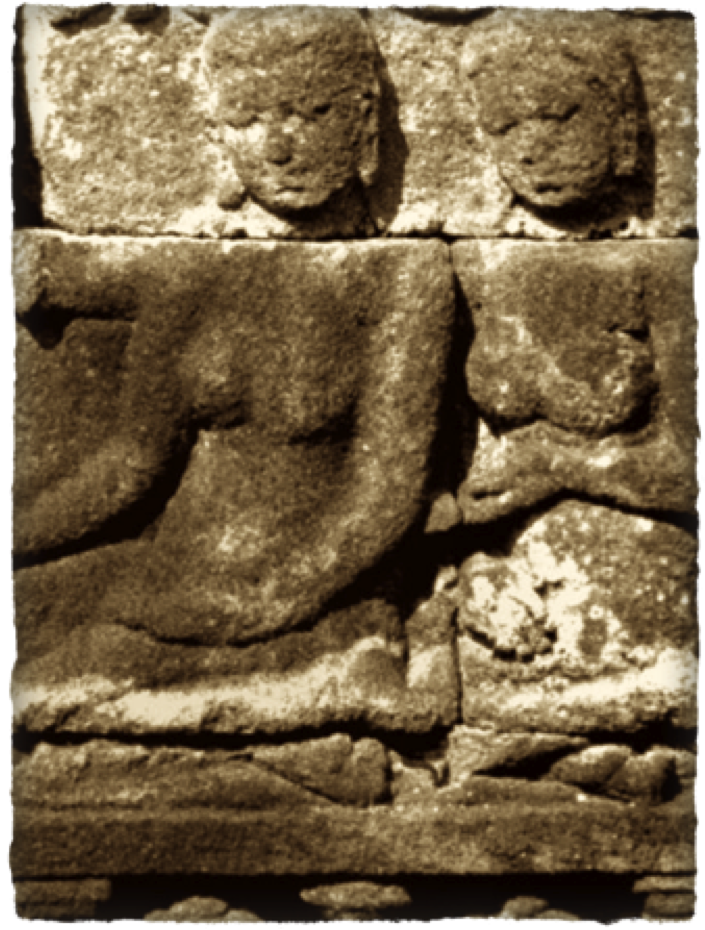
the Bhikkhunīs of Borobudur
Image 1: Bhikkhunīs of Borobudur
This paper is the tenth and final post in a series of extracts from the larger article titled “Light of the Kilis: Our Indonesian Bhikkhunī Ancestors” which explores what is known of the ancient Buddhist women monastics and ascetics of the Indonesian archipelago.
 
Chronologically, this post falls between part 4 and part 5 in this Awakening Buddhist Women blog series. Prepared especially for the 14th Sakyadhita International Conference in Yogyakarta, this previously unpublished extract was presented live at the Sakyadhita Conference. 

“Light of the Kilis” is based on research materials gathered from travelogues, local oral traditions, dedicatory inscriptions, monuments, and statuary, or what remains of these within their cultural and historical context. The materials span a time period of more than 2000 years, from the 3rd century BCE up to modern times.

Here we focus on the 8th and 9th centuries and materials that are of direct relevance to the Sakyadhita Conference locale and of special interest and value to women in Buddhism. I touch on the feminine aspect of Indonesian candis, the appearance and role of both the esoteric Bhagavatī Aryā Tārā, the human queen Devī Tārā, and her daughter (or granddaughter) Śrī Sanjiwana Prāmodhavardhanī, the latter two Buddhist women being key persons involved with the foundation and establishment of the world-famous Borobudur monument. I also highlight images of bhikṣuṇīs and the dual sangha (bhikkhus and bhikkhunīs) that are portrayed on three levels of the wall reliefs of the Borobudur monument. These images are of outstanding historical value, because we can glean from them unparalleled visual knowledge of Buddhist women’s monastic way of life at the time they were created. I review and describe these images in the context of the Dharma teaching stories they illustrate – shining examples of women’s leadership and eminence in the Buddhist sangha, as they were conceived of and understood during this period.

Monday, May 25, 2015

History of Women in Buddhism - Indonesia: Part 8

Gāyatrī Rājapatni: Queen, Bhikkhunī & the Prajñāpāramitā


Ayyā Tathālokā Bhikkhunī[1]

In this eighth post in our “History of Women in Buddhism - Indonesia” series leading up to the Sakyadhita International Buddhist Women’s Conference in Yogyakarta, Indonesia, we explore the life of one of Indonesia’s most interesting historical Buddhist women.  Earlier prominent women leaders and women ascetics/monastics/nuns that we’ve portrayed in this series such as Ken Dedes, Bhrikuti, Devi Kilisuci, Ratu Shima and Manimekhalai have been interesting in enigma--they are fascinating in that we catch such brief glimpses of their lives, leaving so much to be filled in by imagination, as we find in the many Indonesian, Indian and Tibetan legends, operas and ballets through which their lives are popularly remembered. In this post however, we have the benefit of a lengthy and highly-descriptive historical documentary poem written by a co-contemporary Buddhist monastic poet/biographer/documenteur passed down to us intact, and at least one very well-preserved mortuary portrait image, the Prajñāpāramitā.  Of further interest in addendum is the role that this image has come to play in the contemporary re-nascence of the Theravada Bhikkhunī Sangha on the other side of the world, in North America.

Extracted from Ayyā Tathālokā’s paper “Light of the Kilis: Our Indonesian Bhikkhuni Ancestors,” this article is part of the series leading up to the 14th Sakyadhita Conference in Yogyakarta, Indonesia.  This post coincides with the release of the first English-language edition of Earl Drake’s Gayatri Rajapatni: The Woman Behind the Glory of Majapahit by Areca Books.


Gāyatrī Rājapatni: Queen, Bhikkhunī & the Prajñāpāramitā


Image 1: Prajñāpāramitā image from East Java
at the National Museum of Indonesia, Jakarta
We will now meet one of the greatest of those women whose life has been passed down to us in memory, posthumously captured by the Buddhist monk poet of the court who knew and wrote of her with such reverence and appreciation.  This woman is the lady Gāyatrī, also known as the Rājapatni, in a way somewhat similar to and reminiscent of the lady Gotamī, also known as the Great Prajāpatī.[2]

Gāyatrī was a devout Buddhist, and the youngest daughter of the founder of Majapahit, the last of the great Indonesian royal dynasties, known as the Rajasa Dynasty.  She had three elder siblings, and together they were known as The Four Princesses of Singasari (Singosari).  The epics remember Gāyatrī as having been a keen student of literature, and political, social and religious matters. She possessed extraordinary beauty, charm, wisdom and intelligence.  And yet, in 1276 CE, at the tender age of sixteen, in a terrible repeat of what happened to Airlangga two hundred years earlier {in Post 5}, her world went mad. She witnessed the destruction of her home and kingdom and the murder of her father under the unsuspected attack of the Duke of Kederi.

Monday, April 20, 2015

History of Women in Buddhism - Indonesia: Part 5

The Mystery Story of Devi Kili Suci ~ the 11th Century Vanishing Crown Princess Bhikkhunī Hermit & Her Selomangleng Goa Cave


Ayyā Tathālokā Bhikkhunī

Image 1: Putrī Sanggramawijaya/
Devi Kili Suci
In this fifth post in our “History of Women in Buddhism - Indonesia” series, we skip over the Borobudur period ahead in time to the 11th century, to a time when royals’ renunciation of the throne for monastic life appears almost commonplace, and the Indonesian mountain hermitages and grottos are frequented by both male and female hermit ascetics of various faiths. Mantranāya/Vajrayāna Buddhism has been spreading in Java since at least the end of the seventh century and has grown strong. We explore the still-popular legendary story of one crown princess turned kili/wiksuni/bhikkhunī/mahāsiddhā, and visit the cave where she lived, practiced, and mysteriously vanished from corporeal existence.

Extracted from Ayyā Tathālokā’s paper “Light of the Kilis: Our Indonesian Bhikkhunī Ancestors,” this is the fifth part in our mini-series leading up to the 14th Sakyadhita Conference in Borobudur, Indonesia.

Monday, April 13, 2015

History of Women in Buddhism - Indonesia: Part 4

International Buddhist Networking, Bhikkhunīs and Women’s Leadership in the 5th-7th Century Indonesian South Seas 


Ayyā Tathālokā Bhikkhunī

This fourth post in our "History of Women in Buddhism" series examines the International Buddhist networks that became well established between India, Indonesia, Sri Lanka and China. 

This post specially coincides with Songkran/Saṃkrānti--the South and Southeast Asian Solar New Year in April, a time in which the sun appears to reach its zenith in the sky and maximum strength. We cover a time period when Buddhism rose in Indonesia, and International Buddhist networks and scholarship rose to a point of fluorescence. Powerful women leaders patronized Buddhist scholarship and the Bhikkhunī Sangha was widespread and well-established. 

Extracted from Ayyā Tathālokā’s paper “Light of the Kilis: Our Indonesian Bhikkhuni Ancestors,” it is the fourth part of the series leading up to the 14th Sakyadhita Conference in Borobudur, Indonesia. [Also: read about worthy historical places to visit, the ancient terminology, and the journey of an Indian nun ]

Monday, April 6, 2015

History of Women in Buddhism - Indonesia: Part 3

South Indian Bhikkhunī Manimekalai Travels to Java


Article author: Āyyā Tathālokā Bhikkhunī
Introduction to this segment: Tathālokā Bhikkhunī and Ādhimuttā Bhikkhunī 

Image 1: Manimekalai distributing food to the needy
with her magic bowl. In contemporary South Indian 
paintings, of which there are many as she continues 
to be a legendary folk hero, she is almost always 
depicted more in appearance like a modern Hindu 
sannyāsinī than a Buddhist monastic.
This third post in our "History of Women in Buddhism" series records the dramatic and inspiring life story of a Buddhist woman saint, Manimekalai, second century South India’s Buddhist Mother Theresa.[1] It examines marks of the status and the mobility of ancient South and Southeast Asian Buddhist women monastics, their environmental and social justice ethics, their rights of self-determination, relationship with politics, and how Buddhism was proactively compared with regards gender issues and women’s rights to other faiths, doctrines and religions of the period. 

This post especially coincides with the Sri Lankan Buddhist observance of Bak Poya on the full moon of April, the commemorative date of the Buddha’s visit to the Isle of Manipallavam aka Nagadipa, which figures so prominently in the life story of Manimekalai.  

Extracted from Ayyā Tathālokā’s paper “Light of the Kilis: Our Indonesian Bhikkhuni Ancestors,” it is part of the series leading up to the 14th Sakyadhita Conference in Borobudur, Indonesia. [Also: read the worthy historical places to visit and about the ancient terminology]

Monday, March 23, 2015

History of Women in Buddhism - Indonesia: Part 2

Indonesian Bhikkhuṇīs & Women Ascetics: A Historical Introduction & Survey of Terminology


Article by Tathālokā Bhikkhunī  
Intro by Ādhimuttā Bhikkhunī

This second part of History of Women in Buddhism series, leading up to the 14th Sakyadhita Conference in Borobudur, is an extract from Ayyā Tathālokā’s paper “Light of the Kilis: Our Indonesian Bhikkhuni Ancestors.” It provides an overview of the Indonesian terminology and a brief historical overview. It explores something of what is known of the ancient Buddhist women monastics and ascetics of the Indonesian archipelago through the travelogues, local oral traditions, dedicatory inscriptions, monuments and statuary that remains of them within their cultural and historical context."

Monday, March 2, 2015

Fear About the World: Confusing Compassion with Despair

Bhiksuni Thubten Chodron

There’s a lot going on in the news these days, which can lead thoughtful people to reflect on the state of the world. Generally, however, we don’t know how to do this in a skillful way. For many of us, reflecting on the state of the world creates a state of distress, and our minds get tight and fearful.

Within that fear there is a lot of “I-grasping,” which we sometimes confuse with compassion. We think, “When I look at the world, and see so much suffering I feel compassion for people.” But in fact, we’re miserable, feeling a sense of despair, fear, depression, and so on. That isn’t genuine compassion. Not recognizing this, some people get afraid of feeling compassion, thinking that it only makes us feel awful. This is a dangerous thought because it can lead us to closing our hearts to others.

Monday, February 9, 2015

History of Women in Buddhism - Indonesia: Introduction

Twelve Javanese Sites Worthy of Interest: Monuments & Sites Related to Women in Buddhism & Bhikkhunīs


Historical Site Article Extracts: Tathālokā Bhikkhunī, 
Maps: Ānandajoti Bhikkhu, 
Introduction: Ādhimuttā Bhikkhunī and all, 
Layout: Ānagarikā Michelle 

Buddhist monastics and lay community members from around the world are preparing to travel to Indonesia for the 14th Sakyadhita Conference at Yogyakarta. For those interested in Buddhist women's history and the history of the ancient Bhikkhuṇī/Bhikṣuṇī Sangha in Indonesia, we thought to make information available about some of the historical (and her-storical) sites worth visiting.

This will enrich the experience of Conference participants in Indonesia providing invaluable opportunities for both intellectual learning and onsite experiential learning, as well as give means for those who cannot travel to learn and grow in knowledge and benefit together from afar.

In the months leading up to the 14th Sakyadhita Conference in Borobudur in June, from March thru May, we plan to publish a series of blog posts extracted from Ayyā Tathālokā's "Light of the Kilis: Our Ancient Bhikkhuṇī Ancestors" paper, researched and prepared for the Sakyadhita-Borobudur Conference. These extract posts will provide more in-depth discussion of various aspects of the History of Women in Buddhism in Indonesia, many with relationship to the historical sites highlighted here. One final site, Borobudur and its vicinity, will be covered and presented upon during the Conference itself, as the Conference will visit the Borobudur monument. At the time of the Conference, we hope to offer a complete downloadable pdf guide to the history and art of the Indonesian Buddhist women's historical sites presented in this series.

The map and information here offer a brief introduction to a few of the places on Java that we thought would be of greatest interest to know about beforehand, and potentially have the chance to plan to visit.